Off the map: Zimbabwe and the 2026 Global Real Estate Transparency Index
Every two years, JLL and LaSalle publish the Global Real Estate Transparency Index. It scores how open, measurable and trustworthy each country's property market is, using 260 factors: how much market data exists and for how long, whether investment performance is measured, how listed property companies report, how clear the laws and ownership records are, how transactions and planning work, and more. Each market gets a score from 1 (fully transparent) to 5 (opaque) and a tier, from Highly Transparent to Opaque.
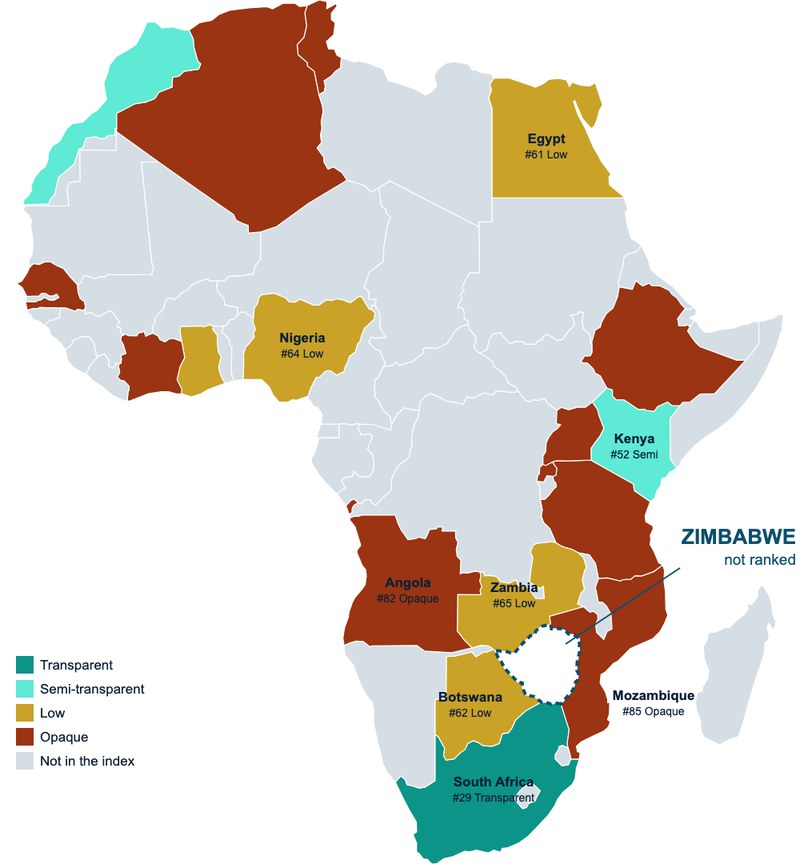
The 2026 edition ranks 88 markets. Zimbabwe is not one of them.
Where the region sits
South Africa is ranked 29th and is Africa's only market in the Transparent tier. Kenya is 52nd (Semi-transparent). Botswana (62nd) and Zambia (65th) sit in the Low tier. Mozambique is 85th, in the Opaque tier, and is named among the markets whose scores slipped back under economic or geopolitical pressure.
Why it matters
Transparency is not an academic score. It decides where money goes. According to the report, the Highly Transparent and Transparent markets attract over 98 percent of global direct real estate investment. Low-transparency markets attract under 0.1 percent, and Opaque markets under 0.01 percent. The report also finds the gap between the most and least transparent markets is widening, as leading markets digitise their records and use AI to analyse them.
| Transparency tier | Share of global direct investment |
|---|---|
| Highly transparent | 81% |
| Transparent | 17.5% |
| Semi-transparent | 1.3% |
| Low | under 0.1% |
| Opaque | under 0.01% |
A market that is not measured at all is, for international investors, close to invisible.
Where Zimbabwe would sit
The index does not score Zimbabwe, so any placement is our own judgement, not JLL's. Against the areas the index looks at, our view is that Zimbabwe would fall in the Opaque tier today, with a score of roughly 4.3 to 4.7, close to Angola and Mozambique. The reasons are familiar to anyone who has bought, sold or financed property here:
- No public price or rent index. Figures live with agents, portals and WhatsApp groups, and asking prices are rarely the prices paid.
- No investment performance benchmark for property investors.
- Ownership risk. Title and allocation disputes, double sales and land fraud are regularly reported, and records are hard to check.
- Slow, paper-heavy transactions, with sale prices not published, although the deeds validation and digitisation programme under SI 76 of 2025 is now under way.
- Thin lending data and values that move with currency conditions.
There are real strengths too: a small but growing group of listed REITs on the ZSE and VFEX that report regularly, and qualified valuers and property professionals.
Title deeds: the foundation
Of all the steps a government can take, digitising title deeds may matter most. The index does not publish a separate score for land records, but the report repeatedly credits land registry digitisation as a reason markets improved: Kenya and India for digitising land registries and planning services, Saudi Arabia for digitising its land registry and public records, and Dubai for extending blockchain-based title registration. It also notes digital land registry records spreading across Sub-Saharan Africa.
Zimbabwe has already started. Statutory Instrument 76 of 2025, the Deeds Registries Regulations 2025, was gazetted on 18 July 2025. It sets up a national programme to validate every existing paper title deed and replace it with a "securitised" deed: an electronic record in the registry, backed by a tamper-proof printed or digital copy. Applications run through the Government's Digital Land Administration Platform (DLAP), with stronger identity and anti-fraud checks. Owners have 24 months to submit their deeds for validation, a deadline widely reported as 18 July 2027. After that, the securitised deed becomes the only recognised title, and owners who have not validated risk being unable to sell or mortgage their property.
This is exactly the kind of reform the index rewards, and it deserves support. Done well, a digital Deeds Registry would tackle several problems at once:
- Less fraud. Buyers, lawyers and banks could confirm the registered owner, bonds and caveats before money changes hands, making double sales and fake title far harder.
- Faster, cheaper transfers. Title searches and registrations that take days or weeks on paper could take minutes.
- Price evidence. If the price is recorded when a transfer is registered, the registry becomes the source of the sales data the market lacks today.
- Lender confidence. Banks lend more readily against security they can verify, which supports mortgage lending.
- Diaspora trust. Zimbabweans abroad could check a property's title from anywhere before they buy.
To turn validation into transparency, the next steps matter as much as the first: secure online title searches for buyers, lawyers and lenders; links to council and survey records; the transaction price captured at registration, with privacy rules for personal details; and regular public statistics from the registry. Owners, especially in the diaspora, should start validating early rather than wait for the 2027 deadline.
What moves a market up
The report is clear about what works. Kenya and India are credited with digitising land registries and planning services, and Dubai with blockchain-based title registration. Saudi Arabia and Dubai publish central, public data on rents, prices and transaction volumes. Thailand and Vietnam have strengthened valuation standards. India has grown its listed property market. None of this is out of reach for Zimbabwe:
- complete the deeds validation and digitisation under SI 76 of 2025, then add online title searches and record the sale price at registration;
- put council approvals and planning records online;
- publish transaction data, or support shared market databases;
- apply international valuation standards consistently, with published evidence;
- grow listed property with regular, comparable reporting; and
- make ownership records clear and checkable.
Putting Zimbabwe on the map
Transparency builds trust, and trust brings investment. The data that would earn Zimbabwe a place in the index already exists, scattered across agents, councils, banks and listings. The work is to bring it together, check it and make it usable. That is the work behind our research and behind our sister platform, Property Intel, which gathers sales, listings, rents and build costs so that buyers, sellers, lenders and investors can decide on evidence rather than rumour.
We would welcome a conversation with JLL and LaSalle, government, councils, lenders and the industry about what it would take to see Zimbabwe measured in the next edition.
Educational analysis, not investment advice.
Sources: JLL and LaSalle, Global Real Estate Transparency Index 2026 (September 2026); Statutory Instrument 76 of 2025 (Deeds Registries Regulations, 2025) as summarised by property.co.zw and legal commentators. Owners should confirm their own deadline and requirements with the Deeds Registry or a conveyancer. Rankings, scores and investment shares are quoted from that report. Zimbabwe does not appear in the index; the Zimbabwe placement and estimated score are Location.ZW's own judgement and are not endorsed by JLL or LaSalle.